Stanford University
Stanford University is one of the world’s most prestigious institutions, renowned for its academic excellence, groundbreaking research, and entrepreneurial spirit. Located in the heart of Silicon Valley, Stanford has shaped the future through innovation, producing Nobel laureates, tech giants, and global leaders.
In this in-depth guide, we explore Stanford’s history, academic programs, campus life, notable alumni, and its impact on technology and education. Whether you’re a prospective student, researcher, or simply curious about this elite institution, this article provides everything you need to know about Stanford University.
1. The History of Stanford University
Founding and Early Years
Stanford University was founded in 1885 by Leland Stanford, a former California governor and railroad tycoon, and his wife, Jane Stanford, in memory of their only child, Leland Stanford Jr., who died of typhoid fever at 15. The university officially opened in 1891 with a mission to promote the public welfare by exercising influence on behalf of humanity and civilization.
Unlike traditional East Coast universities, Stanford was coeducational and nondenominational from its inception, reflecting progressive values.
Growth and Challenges
The 1906 San Francisco earthquake severely damaged Stanford’s campus, but reconstruction efforts led to modernization. By the mid-20th century, Stanford emerged as a leading research institution, particularly in engineering and sciences.
The post-WWII era saw rapid expansion, with increased federal funding for research. Stanford’s proximity to Silicon Valley (which it helped create) cemented its reputation as a hub for innovation.
2. Stanford’s Academic Excellence
Stanford offers seven schools covering a wide range of disciplines:
-
School of Humanities & Sciences
-
School of Engineering
-
School of Medicine
-
Graduate School of Education
-
Stanford Law School
-
Graduate School of Business
-
School of Earth, Energy & Environmental Sciences
Undergraduate Programs
Stanford’s Bachelor of Arts (B.A.) and Bachelor of Science (B.S.) programs emphasize interdisciplinary learning. Popular majors include:
-
Computer Science (ranked #1 globally)
-
Engineering (Mechanical, Electrical, Bioengineering)
-
Economics
-
Biology & Medicine
-
Political Science & International Relations
Graduate & Professional Programs
Stanford’s graduate schools are among the best in the world:
-
Stanford Graduate School of Business (GSB) – Top-ranked MBA program
-
Stanford Law School – Elite legal education
-
Stanford School of Medicine – Pioneering medical research
-
School of Engineering – Leading in AI, robotics, and tech innovation
Research & Innovation
Stanford is a research powerhouse, with breakthroughs in:
-
Artificial Intelligence (AI) & Machine Learning
-
Biotechnology & Genomics
-
Renewable Energy & Climate Science
-
Neuroscience & Medicine
The university receives billions in research funding annually, collaborating with institutions like NASA, Google, and Tesla.
3. Stanford’s Campus: A Blend of Beauty and Innovation
Main Campus Highlights
-
The Oval (Main Quad) – Historic center with Romanesque architecture
-
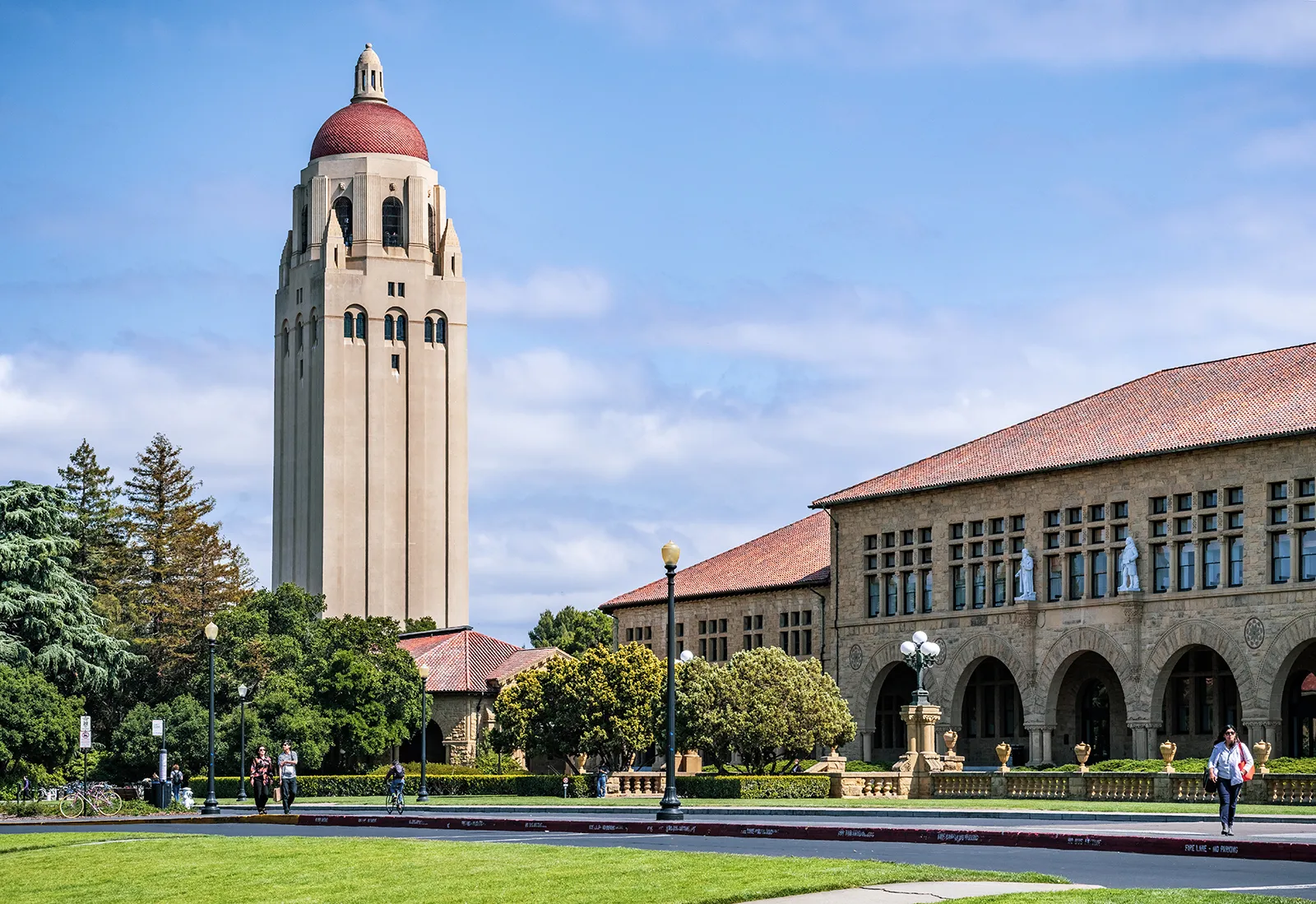
Hoover Tower – Landmark honoring President Herbert Hoover
-
Cantor Arts Center – Over 24,000 artworks
-
Stanford Memorial Church – Stunning mosaics and stained glass
Silicon Valley Connection
Stanford’s location fuels its tech dominance:
-
Stanford Research Park – Home to HP, Tesla, VMware
-
Startup Culture – Alumni founded Google, Netflix, Instagram, LinkedIn
-
d.school (Design School) – Promotes innovation and entrepreneurship
4. Student Life at Stanford
Housing & Residential Life
Stanford guarantees housing for undergraduates, with unique dorm cultures:
-
Freshman Dorms (Wilbur, Stern, FloMo)
-
Theme Houses (e.g., EAST – East Asian Studies Theme House)
-
Greek Life – About 25% of students join fraternities/sororities
Extracurricular Activities
-
Athletics – Stanford Cardinals compete in NCAA Division I (126 national titles)
-
Clubs & Organizations – 600+ groups, from debate to robotics
-
Stanford Entrepreneurship Network – Supports student startups
Traditions & Events
-
Big Game – Historic football rivalry with UC Berkeley
-
Full Moon on the Quad – Freshman kissing tradition
-
Viennese Ball – Annual formal dance
5. Stanford’s Notable Alumni & Impact
Stanford alumni have shaped industries worldwide:
Tech & Business Leaders
-
Larry Page & Sergey Brin (Google founders)
-
Elon Musk (Tesla, SpaceX)
-
Reid Hoffman (LinkedIn co-founder)
-
Peter Thiel (PayPal, Palantir)
Political & Global Influencers
-
Herbert Hoover (U.S. President)
-
Sandra Day O’Connor (First female U.S. Supreme Court Justice)
-
Condoleezza Rice (Former U.S. Secretary of State)
Nobel Laureates & Scientists
-
Kip Thorne (Physics Nobel Prize, gravitational waves)
-
Paul Berg (Chemistry Nobel, genetic engineering)
-
Jennifer Doudna (CRISPR gene-editing pioneer)
6. Admissions: How to Get Into Stanford
Stanford’s acceptance rate is ~4%, making it one of the most selective universities. Key factors include:
Undergraduate Admissions
-
Academic Excellence (Top grades, rigorous coursework)
-
Standardized Tests (SAT/ACT optional but recommended)
-
Essays & Recommendations (Show passion, leadership, uniqueness)
-
Extracurriculars (Depth over breadth)
Graduate Admissions
-
Strong GPA & Test Scores (GRE, GMAT, LSAT, MCAT)
-
Research/Work Experience
-
Letters of Recommendation
-
Statement of Purpose
7. Why Stanford Stands Out
-
Silicon Valley Advantage – Unmatched tech & startup opportunities
-
Interdisciplinary Learning – Encourages cross-field collaboration
-
Global Network – Powerful alumni connections worldwide
-
Cutting-Edge Research – Continues to push boundaries in science and tech
Final Thoughts
Stanford University is more than just a school—it’s a launchpad for visionaries. From Nobel-winning research to billion-dollar startups, Stanford’s influence spans the globe. Whether you dream of becoming a tech entrepreneur, a groundbreaking scientist, or a global leader, Stanford provides the tools, network, and environment to succeed.