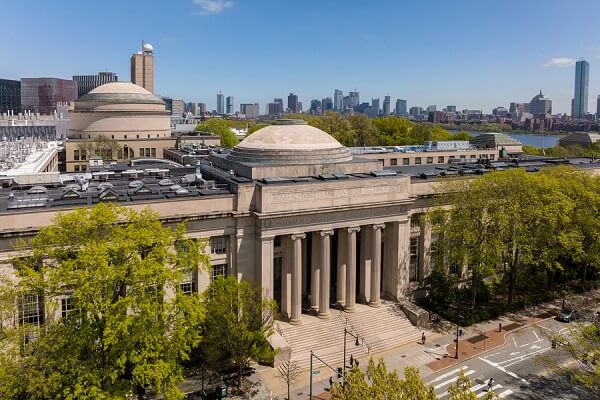
Massachusetts Institute of Technology
The Massachusetts Institute of Technology (MIT) is one of the most prestigious universities in the world, renowned for its cutting-edge research, technological advancements, and exceptional academic programs. Located in Cambridge, Massachusetts, MIT has consistently ranked among the top universities globally, attracting brilliant minds from every corner of the planet.
In this comprehensive guide, we’ll explore:
-
The history and founding of MIT
-
Its world-class academic programs
-
Groundbreaking research and innovations
-
Notable alumni and faculty
-
MIT’s entrepreneurial ecosystem
-
Why MIT remains a global leader in STEM education
By the end of this article, you’ll understand why MIT is a powerhouse of innovation and how it continues to shape the future of technology, science, and business.
1. The History and Founding of MIT
MIT was established in 1861 by William Barton Rogers, a visionary scientist who believed in the importance of applied science and hands-on learning. Unlike traditional universities of the time, MIT focused on practical education, combining laboratory work with theoretical studies.
Key Milestones in MIT’s History:
-
1865: First classes held in Boston.
-
1916: Moved to its current location in Cambridge.
-
1930s-1940s: Played a crucial role in World War II research, including radar and atomic energy.
-
1950s-1960s: Emerged as a leader in computer science and artificial intelligence (AI).
-
2000s-Present: Continues to pioneer advancements in biotechnology, robotics, and renewable energy.
MIT’s motto, “Mens et Manus” (Mind and Hand), reflects its commitment to blending intellectual knowledge with practical application.
2. MIT’s World-Class Academic Programs
MIT offers undergraduate, graduate, and doctoral programs across five schools:
-
School of Engineering (Top-ranked globally)
-
School of Science (Leading in physics, chemistry, biology)
-
School of Architecture and Planning (Innovative design and urban studies)
-
Sloan School of Management (Elite MBA and business programs)
-
School of Humanities, Arts, and Social Sciences (Interdisciplinary studies)
Top-Ranked MIT Programs:
-
Computer Science & AI (Ranked #1 globally)
-
Engineering (Mechanical, Electrical, Aerospace)
-
Economics & Business (Sloan MBA)
-
Physics & Mathematics
-
Biological Sciences & Biotechnology
MIT’s OpenCourseWare (OCW) initiative provides free online access to course materials, benefiting millions of learners worldwide.
3. Groundbreaking Research and Innovations
MIT is synonymous with innovation. Its researchers have contributed to some of the most transformative technologies in history.
Notable MIT Research Breakthroughs:
-
Development of RADAR (WWII)
-
First chemical synthesis of penicillin
-
Invention of the World Wide Web (Tim Berners-Lee, MIT alum)
-
Advancements in AI & Machine Learning (MIT CSAIL Lab)
-
CRISPR Gene Editing (Feng Zhang, MIT researcher)
-
Self-Driving Cars (MIT’s Computer Science Lab)
MIT also leads in renewable energy research, including fusion energy, solar power, and battery technology.
4. Notable MIT Alumni and Faculty
MIT’s alumni and faculty include Nobel laureates, Turing Award winners, astronauts, and industry leaders.
Famous MIT Alumni:
-
Kofi Annan (Former UN Secretary-General)
-
Buzz Aldrin (Apollo 11 Astronaut)
-
Amar Bose (Founder of Bose Corporation)
-
Drew Houston (CEO of Dropbox)
-
Andrea Ghez (Nobel Prize in Physics)
Renowned MIT Faculty:
-
Noam Chomsky (Linguistics)
-
Robert Langer (Biotechnology pioneer)
-
Esther Duflo (Nobel Prize in Economics)
5. MIT’s Entrepreneurial Ecosystem
MIT has one of the strongest startup cultures in the world. The MIT $100K Entrepreneurship Competition has launched companies like Zipcar, Akamai, and HubSpot.
MIT’s Innovation Hubs:
-
MIT Media Lab (Futuristic tech research)
-
MIT.nano (Nanotechnology research)
-
The Engine (Supports hard-tech startups)
Companies founded by MIT alumni generate over $2 trillion in annual revenue, equivalent to the 10th largest economy in the world.
6. Why MIT Remains a Global Leader in STEM Education
MIT’s success stems from:
✅ Hands-on, problem-solving approach
✅ Strong industry partnerships (Google, Apple, NASA)
✅ Cutting-edge research facilities
✅ Diverse and collaborative student body
MIT’s acceptance rate is highly competitive (around 4%), but its impact on global innovation is unmatched.
Conclusion: Why MIT Stands Out
The Massachusetts Institute of Technology (MIT) is more than just a university—it’s a hub of innovation, entrepreneurship, and scientific discovery. From pioneering AI research to launching world-changing startups, MIT continues to shape the future.
Whether you’re a student aspiring to join MIT, a researcher looking for breakthroughs, or a tech enthusiast curious about its impact, MIT’s legacy is undeniable.
Want to Learn More About MIT?
-
Visit MIT’s Official Website
-
Explore MIT OpenCourseWare for free courses
-
Follow MIT News for the latest research updates
MIT isn’t just educating students—it’s changing the world.