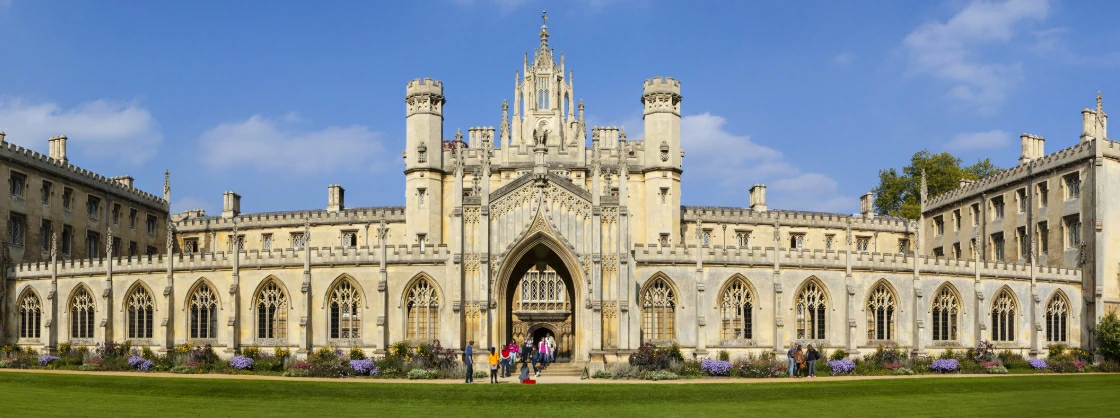
University of Cambridge
The University of Cambridge is one of the world’s oldest and most prestigious universities, renowned for its academic excellence, groundbreaking research, and historic legacy. Founded in 1209, Cambridge has produced some of history’s greatest thinkers, including Isaac Newton, Charles Darwin, and Stephen Hawking.
This in-depth guide covers:
-
The history and establishment of Cambridge
-
Its world-leading academic structure and colleges
-
Groundbreaking research and discoveries
-
Notable alumni and Nobel laureates
-
The unique collegiate system
-
Why Cambridge remains a global education leader
By the end, you’ll understand why Cambridge continues to rank among the top universities worldwide and how it maintains its reputation for excellence.
1. The History and Founding of the University of Cambridge
Cambridge was established in 1209 by scholars who left the University of Oxford due to political conflicts. Over the centuries, it evolved into a center of learning, rivaling Oxford in the Oxbridge tradition.
Key Historical Milestones:
-
1231: Recognized by King Henry III, granting teaching rights.
-
1284: First college, Peterhouse, was founded.
-
16th-17th centuries: Rise of scientific inquiry (Newton, Bacon).
-
19th century: Expanded to include women (Girton College, 1869).
-
20th-21st centuries: Continued leadership in science, tech, and humanities.
Cambridge’s motto, “Hinc lucem et pocula sacra” (From here, light and sacred draughts), reflects its commitment to enlightenment and knowledge.
2. Cambridge’s Academic Structure and Colleges
Unlike most universities, Cambridge operates under a collegiate system, where students belong to both a department (faculty) and a college.
Six Schools of Study:
-
Arts & Humanities (Literature, History, Philosophy)
-
Biological Sciences (Medicine, Genetics, Biochemistry)
-
Clinical Medicine (World-leading medical research)
-
Humanities & Social Sciences (Economics, Politics, Law)
-
Physical Sciences (Physics, Chemistry, Mathematics)
-
Technology (Engineering, Computer Science)
Famous Cambridge Colleges:
-
Trinity College (Largest, alumni: Newton, Byron)
-
King’s College (Iconic chapel, Keynes, Turing)
-
St John’s College (Notable scientists and writers)
-
Churchill College (STEM-focused, Hawking’s college)
Each college has its own traditions, scholarships, and rivalries, creating a unique student experience.
3. Groundbreaking Research and Discoveries
Cambridge has been at the forefront of scientific, medical, and technological breakthroughs for centuries.
Notable Cambridge Discoveries:
-
Laws of Motion & Gravity (Isaac Newton)
-
Theory of Evolution (Charles Darwin)
-
Structure of DNA (Watson & Crick)
-
Development of the Electron Microscope
-
Advances in AI & Computing (Alan Turing)
-
Breakthroughs in Stem Cell Research
Cambridge researchers have won 121 Nobel Prizes, more than any other institution except Harvard.
4. Notable Alumni and Nobel Laureates
Cambridge’s alumni network includes prime ministers, scientists, writers, and tech innovators.
Famous Cambridge Alumni:
-
Sir Isaac Newton (Father of Modern Physics)
-
Charles Darwin (Theory of Evolution)
-
Stephen Hawking (Theoretical Physicist)
-
Alan Turing (Pioneer of Computer Science)
-
John Maynard Keynes (Influential Economist)
-
Emma Thompson (Academy Award-winning Actress)
Recent Nobel Prize Winners:
-
2022: Carolyn Bertozzi (Chemistry)
-
2020: Roger Penrose (Physics)
-
2019: Peter Ratcliffe (Medicine)
5. The Unique Collegiate System
Cambridge’s 31 colleges are more than just dormitories—they are self-governing academic communities.
How the College System Works:
-
Students apply to a specific college (or make an open application).
-
Colleges provide tutorials (supervisions), accommodation, and social life.
-
Each has its own library, dining hall, and sports teams.
This system fosters close mentorship, with students receiving personalized teaching from leading academics.
6. Why Cambridge Remains a Global Education Leader
Cambridge consistently ranks #1 or #2 globally (competing with Oxford, Harvard, and MIT) due to:
✅ World-class faculty and research facilities
✅ Interdisciplinary learning approach
✅ Strong industry and government partnerships
✅ Historic prestige and global alumni network
Cambridge’s Global Rankings (2024):
-
QS World University Rankings: #2
-
Times Higher Education (THE): #3
-
Academic Ranking of World Universities (ARWU): #3
With an acceptance rate of ~21%, Cambridge is highly selective but offers generous scholarships for international students.
Conclusion: Why Cambridge Stands the Test of Time
The University of Cambridge is not just a university—it’s a living monument to human knowledge and progress. From Newton’s laws to the discovery of DNA, Cambridge has shaped modern civilization.
Whether you’re a student dreaming of studying at Cambridge, a researcher seeking collaboration, or a history enthusiast, Cambridge’s legacy is unparalleled.
Want to Learn More About Cambridge?
-
Explore Cambridge Admissions
-
Follow Cambridge News for latest research
Cambridge isn’t just preserving history—it’s creating the future.


